Most homeowners judge their air conditioner by feel. If the air is cold, it “works.” But comfort is a lagging indicator. By the time you feel that your home isn’t cooling, your system may have been struggling silently for weeks. There is a single, measurable number that tells you the truth long before you feel it: Delta T. During a Bakersfield summer, understanding it is the difference between a quick tune-up and an emergency repair.
This is the first article in a two-part series. Here we explain the science behind cooling and the Delta T rule professionals live by. In the companion piece, “7 Reasons AC Systems Fail During Bakersfield Summers,” we apply it to the seven failures a narrow Delta T is usually warning you about.
The Physics of Cooling
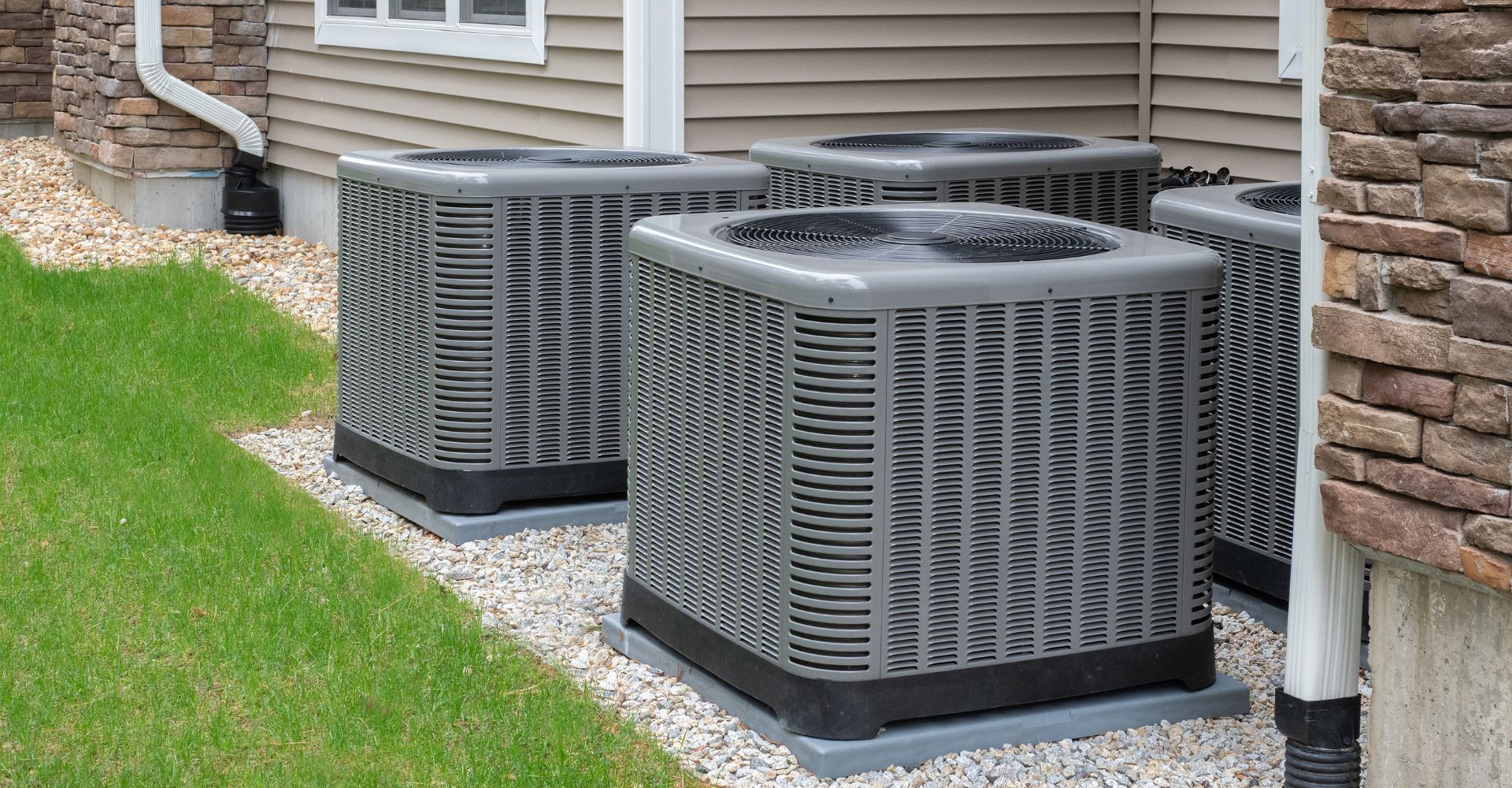
It is a common misconception that air conditioning “creates” cold. In truth, an air conditioner is a heat-transfer machine. It extracts thermal energy from the indoor air and rejects that heat into the outdoor environment. During a heatwave, the rising outdoor temperature significantly increases the thermal load on your home, pushing the internal components to their mechanical limits. This is why Delta T matters so much in Bakersfield: your system isn’t fighting a fixed battle, it is fighting a harder one every degree the temperature climbs. The only way to know whether it is keeping up is to measure how much heat it is actually removing from your air.
The Delta T Rule
Understanding how an air conditioner removes heat is only part of the equation. The next step is knowing how HVAC professionals measure whether that heat transfer is happening efficiently. That’s where the Delta T rule comes in.
The Delta T Rule: Understanding the Limits of Heat Transfer
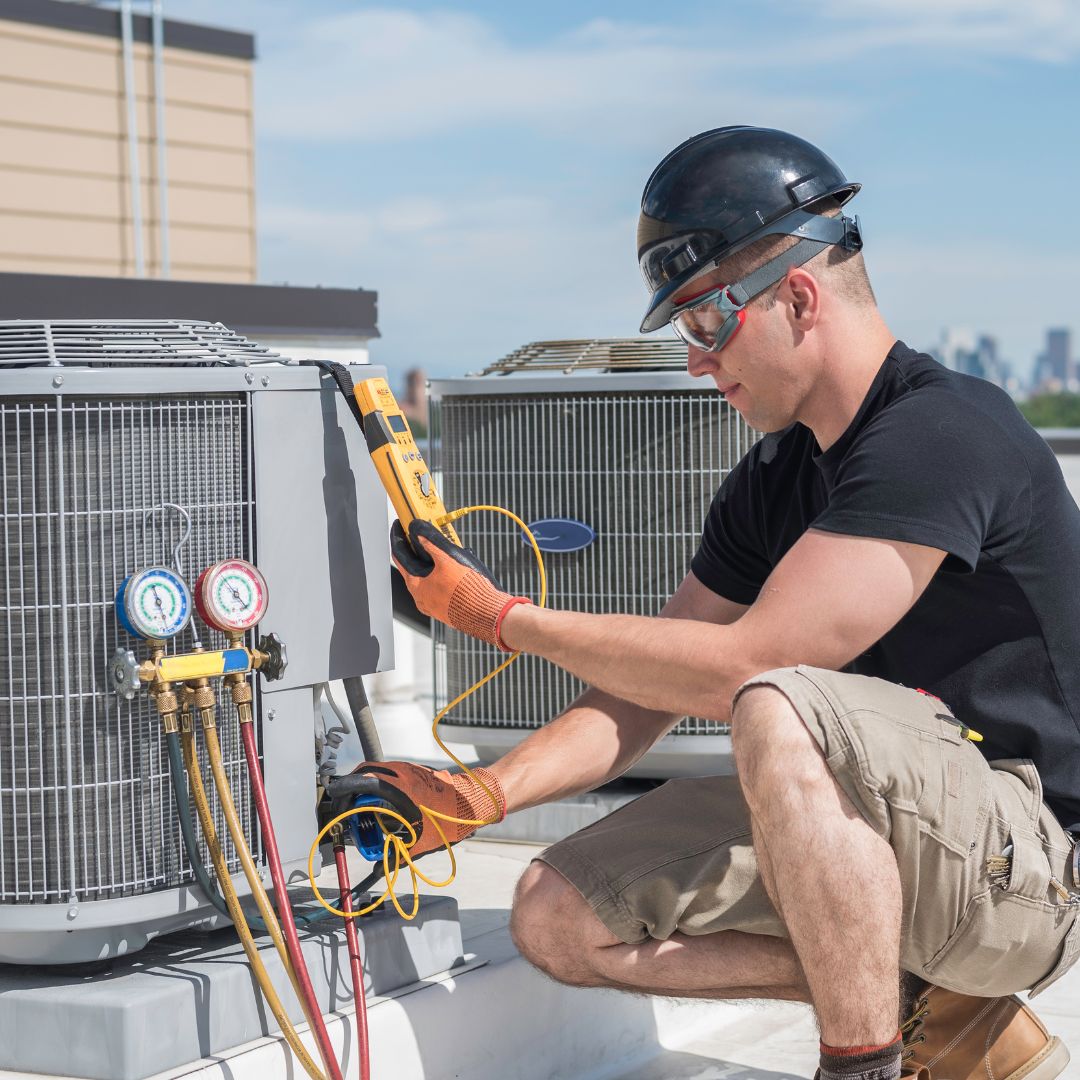
To assess whether your system is performing correctly, HVAC professionals use the “Delta T” rule. This refers to the temperature difference between the air entering your return vents and the air exiting your supply registers. According to HVAC School, A healthy, well-maintained residential system typically achieves a Delta T of 15°F to 20°F. If your indoor temperature is 75°F, your supply air should ideally be between 55°F and 60°F. When your AC struggles, this Delta T narrows. Understanding this threshold is crucial; if your system is blowing 70°F air on a 95°F day, it is not effectively removing heat, and the constant, futile cycle of running will lead to premature failure.
How to Check Your Own Delta T at Home
You don’t need professional tools for basic reading, just a reliable digital or instant-read thermometer. Run your AC on its normal cooling setting for at least 15 minutes so the system stabilizes. Take your first reading at a return air grille (where room air is pulled back in), then a second at the nearest supply register (where cooled air blows out), holding the thermometer in the airflow until the number settles. Subtract the supply temperature from the return temperature. If your return reads 76°F and your supply reads 58°F, your Delta T is 18°F, comfortably healthy. Take the reading at the same time of day across a season for a simple, repeatable way to spot trouble early.
What Your Reading Is Telling You
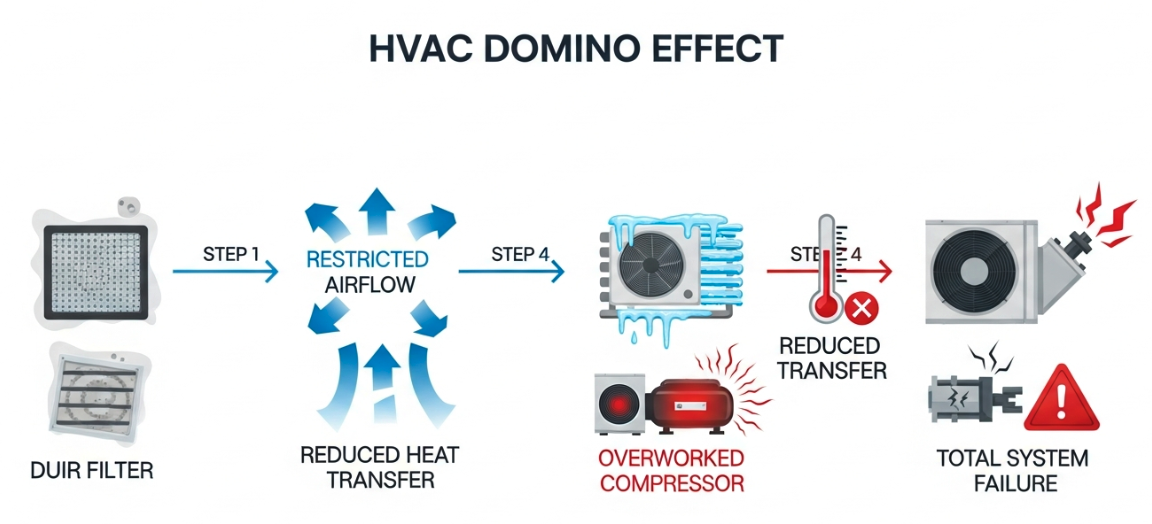
A number outside the 15°F to 20°F window is your system asking for help, and the direction points to the cause. A Delta T that is too low (under about 15°F) usually means the system can’t absorb enough heat: low refrigerant from a leak, a dirty or icing coil, or a struggling compressor. A Delta T that is too high (above about 20-22°F) means not enough air is moving across the coil: a clogged filter, a failing blower motor, or blocked vents. Either way, the reading is rarely a standalone problem. It is the visible symptom of a mechanical fault upstream, which is what makes this single number such a powerful early-warning tool.
Climate matters too. An AC both lowers air temperature and removes moisture. Bakersfield’s dry air means your system spends less energy on moisture and more on cooling, so a healthy local system often reads near the top of the range, around 18°F to 20°F. A reading that would be normal in a humid coastal city may be an early warning here.
The real value of tracking Delta T is time. A narrowing number gives you weeks of warning before a failure, when repairs are cheap and scheduled on your terms rather than during a 90-degree emergency.
Want a Professional Delta T Reading?
If your home isn’t cooling the way it should, or your readings look off, the cause is usually a small, fixable issue that hasn’t fully failed yet. At Gundlach’s Service, our technicians measure system performance precisely and pinpoint the exact cause of a weak Delta T before it becomes an expensive repair.
- Precise system performance testing
- Refrigerant and airflow inspections
- Preventative HVAC maintenance
- Trusted Bakersfield technicians since 1900
Schedule your AC Inspection Today and get a FREE Trip Charge with any paid repair.
Up Next: The 7 Failures Behind a Weak Delta T
Now that you know what Delta T is and how to read it, the next question is what causes it to slip. In Part 2, “7 Reasons AC Systems Fail During Bakersfield Summers,” we walk through the seven specific failures, from dirty filters to compressor breakdown, that a narrowing Delta T is usually warning you about.
Visit Gundlach’s Service or call (661) 327-3052 to book your service appointment.